Welcome to Mars, pilot. Gravity is 38 percent of what you trained on, the surface is loose regolith, and the nearest tow truck is roughly 225 million kilometers away. Mars Rally Championship is free, runs in any modern browser, and asks for no download and no signup — but the red planet does not hand out medals for attendance. This guide is your onboarding, in the order that actually works.
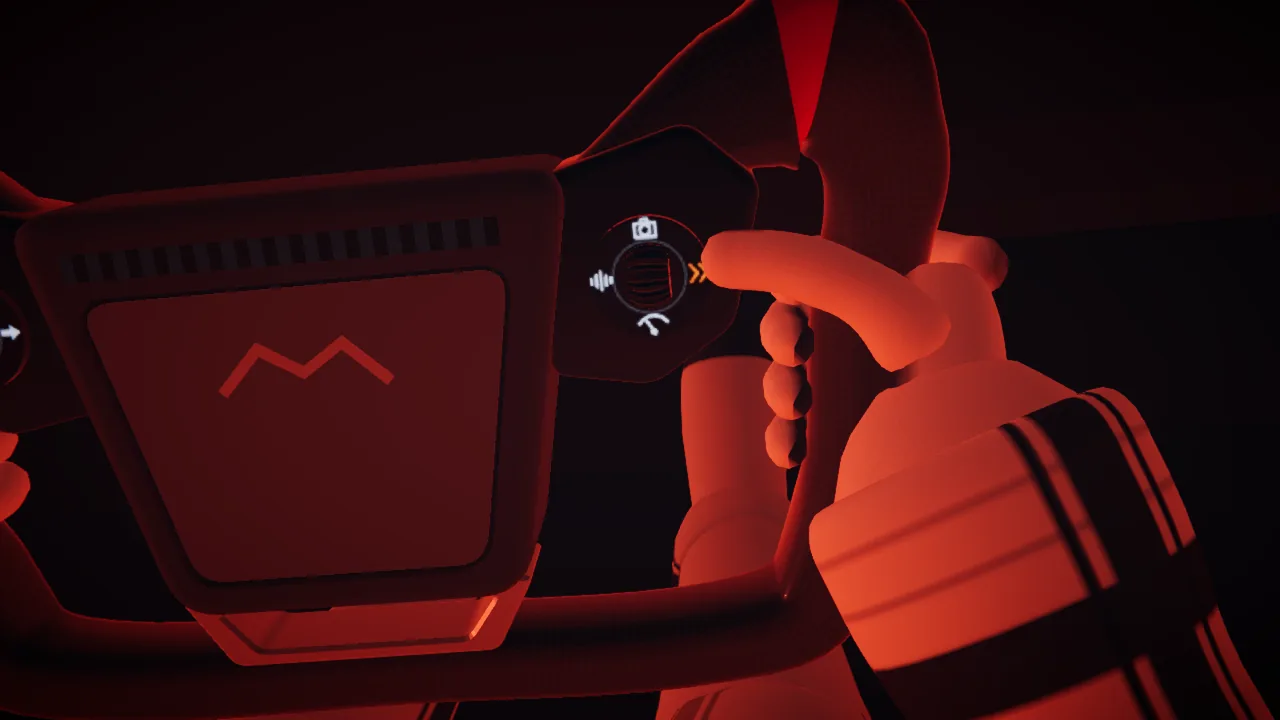
In-game screenshot: the yoke from the pilot's seat. The strip of 16 shift lights over the horn pad fills from the left as the motor revs.
Start at the Proving Ground
The tutorial is called the Proving Ground, a first visit offers it before anything is timed, and skipping it is the classic rookie mistake. It's a guided course of nineteen lessons that drills the three skills every Mars pilot lives by: braking early (stopping distances run long at 0.38 g), pivoting on the handbrake, and landing jumps flat. Lesson cards talk you through it; the co-driver's voice, reading pace notes through your browser's speech engine, joins once you're on a timed stage. When the course ends, the game rolls you straight into your first timed run, on Stage 1, The Eight. Skipping lands you in the same place without the lessons. Practice the handbrake.
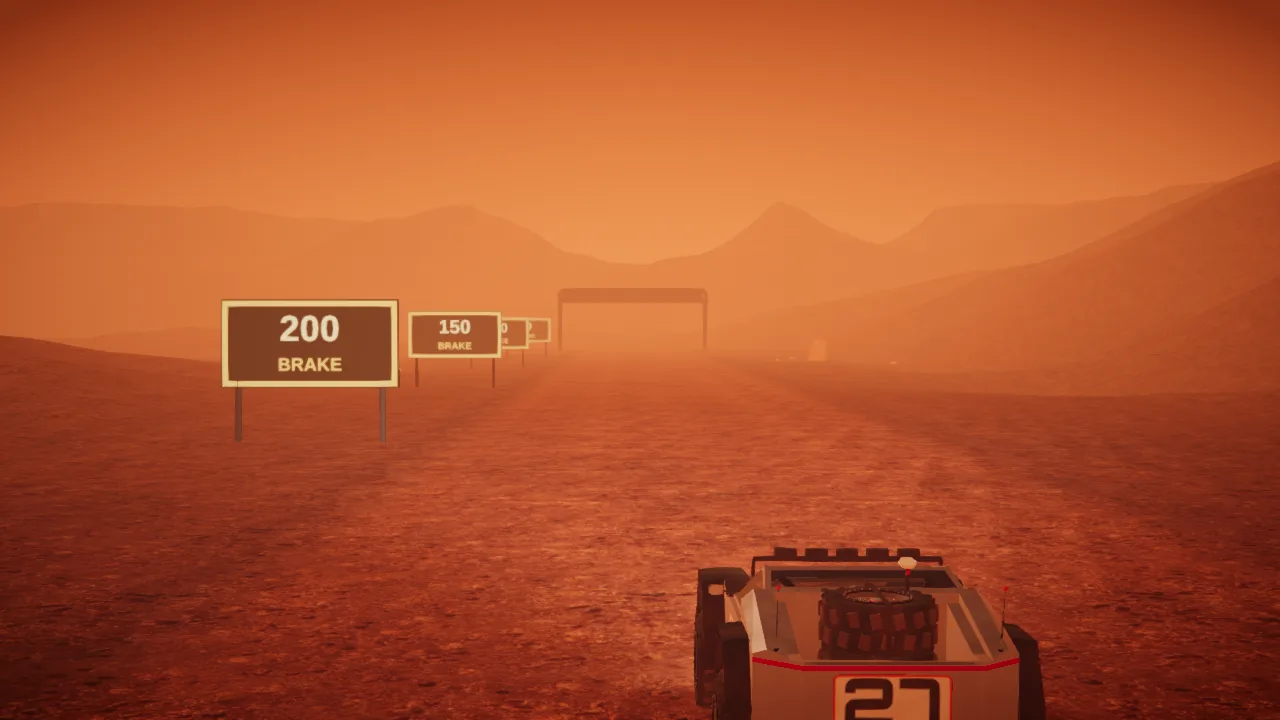
In-game screenshot: the Proving Ground's braking boards count down to a stop line, the first lesson in how much room a rover needs.
Learn the controls — and the gearbox
Keyboard, gamepad, and mobile touch are all supported. A gamepad works as soon as you press any button on it, and on a phone you get on-screen touch controls. The keyboard defaults:
| Action | Keys |
|---|---|
| Throttle / brake | Up / down arrows |
| Steer | Left / right arrows |
| Handbrake | Space |
| Shift up / down | A / Z |
| Restart stage | R |
| Back to the last gate | T |
The rover is electric, and the gearbox has three positions: L, D, and H. Every run launches in L, the torque gear, which runs to about 209 km/h and suits steep climbs and tight sections. D is the taller gear the tutorial has you shift into once the ground opens up, and H is the tallest of the three, for long flats. Keep one eye on the power/battery/regen readout in the HUD: braking feeds charge back into the pack, so smooth driving is literally free energy.
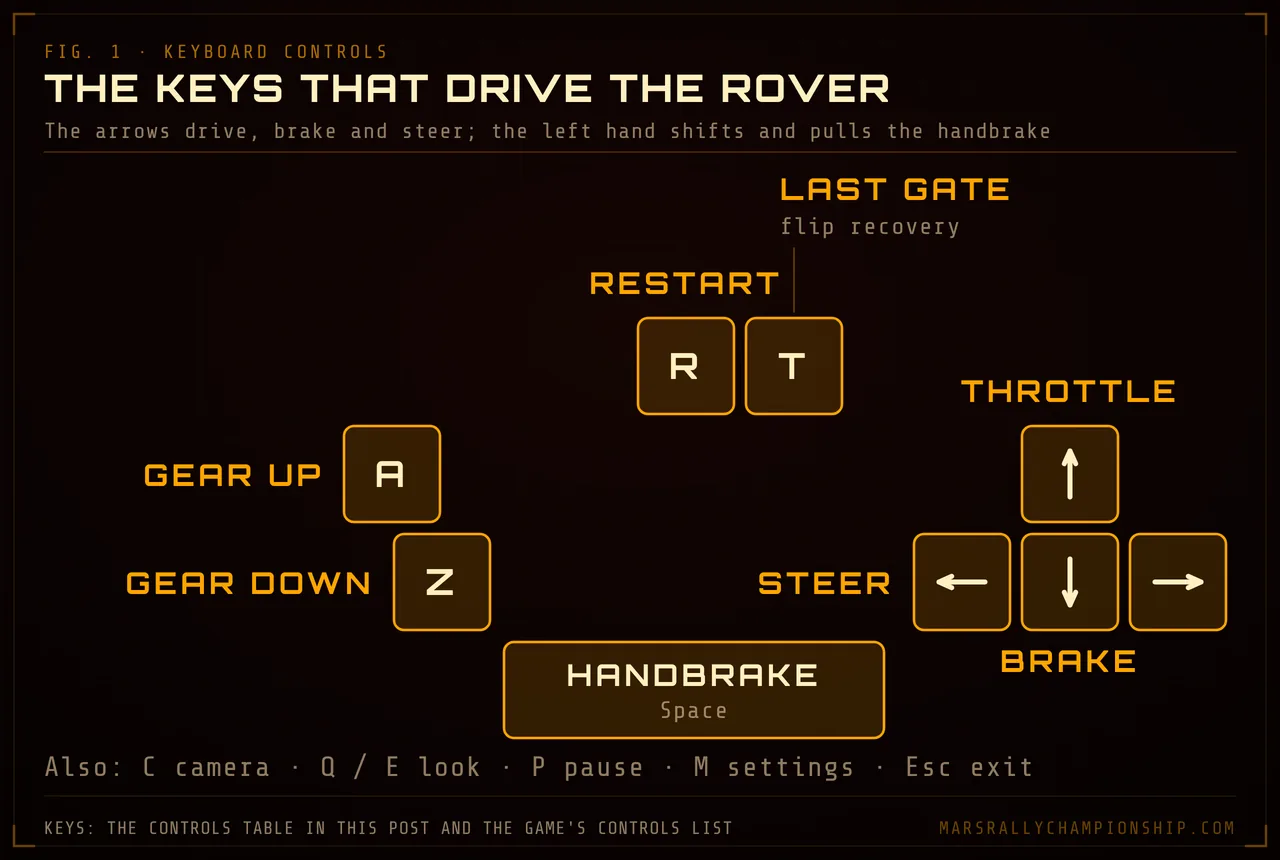
Diagram: the arrow keys drive, brake and steer; the left hand keeps the gears, the handbrake, restart and the last gate.
Respect the 0.38 g
Everything you know about braking points is wrong here. At Mars gravity, jumps go long, landings arrive late, and regolith offers a fraction of the grip your instincts expect. Three rules carry further than any setup ever will:
- Brake before the crest, not after. Airborne rovers don't brake.
- Land flat. The damage model tracks chassis, motor, and battery separately, and nose-first landings tax all three.
- Pivot, don't push. A dab of handbrake rotates the rover into hairpins; steering alone just writes a wider line.
The storm variant runs its dust storm at full strength for the whole stage, and it drains the battery 50 percent faster. Don't panic — ease off, drive clean, and let regen claw some of it back.
Your first medals on Stage 2
Stage 2, The Long Run, is the gentlest of the three open stages: 2.3 km of easy ground, two real corners and long gaps between its twelve gates. Every stage has bronze, silver, and gold pars; bronze here, 4:16.3, asks only that you finish without treating the scenery as an apex. Stage 3, The Opener, is the harder test: 1.16 km, but its two tightest corners come 51 m and 75 m off the start line, down a steep descent. Split-delta timing shows your live gap to your best run, and the rival ladder always lines up the ghost just above your personal best — beat it, take its spot, repeat. Replays are bit-exact because the physics is deterministic down to the individual wheel, so when you lose to a ghost by three tenths, it wasn't lag. It was you. You can also download your best ghost for each stage, which is either a trophy or evidence, depending on the run.
The results screen also scores the run against the stage's derived par times, so a finish is never just a number — it is a medal you did or did not earn.
Work the daily economy
Once you're finishing stages, the meta loop starts paying out:
- Daily challenge. One seeded stage per day — every pilot on Earth (and presumably Mars) gets the identical stage and sky. It resets at your local midnight, and consecutive days of real attempts build a streak: a finish, or a run that reaches two gates or lasts a minute. Details on the daily challenge page.
- Daily quests. Three per day, and the steadiest credit income a new pilot has.
- Supply crates. 500 credits each, four rarity tiers, and a pity timer so a cold streak can't last forever.
- The garage. Credits and crates feed your garage: 13 paints running from Stainless Steel up to Ion Trail — which glows — plus 5 rim sets and 3 caliper options.
Underneath it all, pilot XP and 30 achievements tick along whether you're grinding or not, and a run that ends early still banks its distance, air time and drift. None of it asks for real money. The whole game is free, crates included.
Graduate to the Mars Cup — then go online
When gold on Stage 2 stops being aspirational, the Mars Cup runs every stage that is open back to back on one cumulative time: it opens on Stage 1, The Eight, at night, runs Stage 2 at sunset and ends on Stage 3's descent, with damage carried from stage to stage. Submit your times to the global leaderboard with just a call sign — no account, no email.
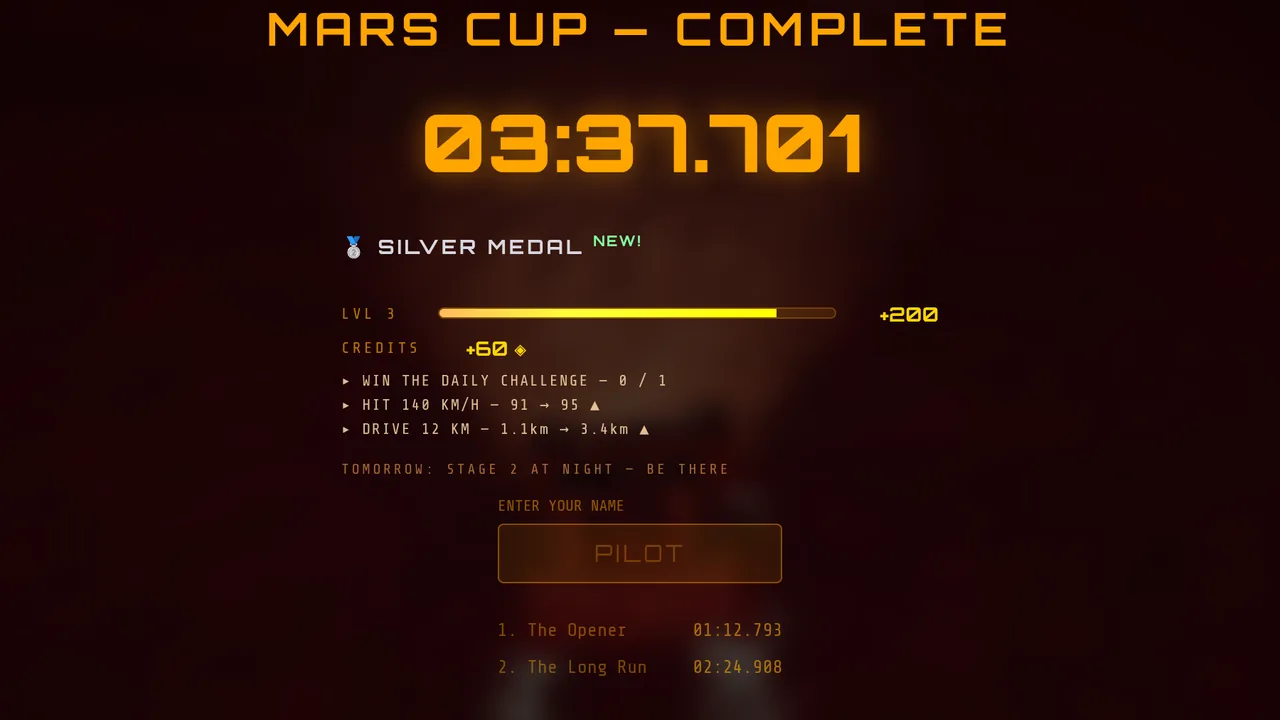
In-game screenshot: the Mars Cup results after a test run. Every open stage is driven back to back on one cumulative time, with damage carried from stage to stage.
Then there's online multiplayer: up to 8 pilots on the same stage at the same time, rendered as ghosts, so nobody can punt you off a ridgeline. Create a private room and share a single invite link, or join the public lobby; everyone counts down from the same start signal, each pilot timed from their own GO, and the server ranks the finishes. Disconnecting mid-race scores a DNF, which on Mars feels thematically appropriate.
See you at the sunset start line, pilot. Bring a call sign worth typing.